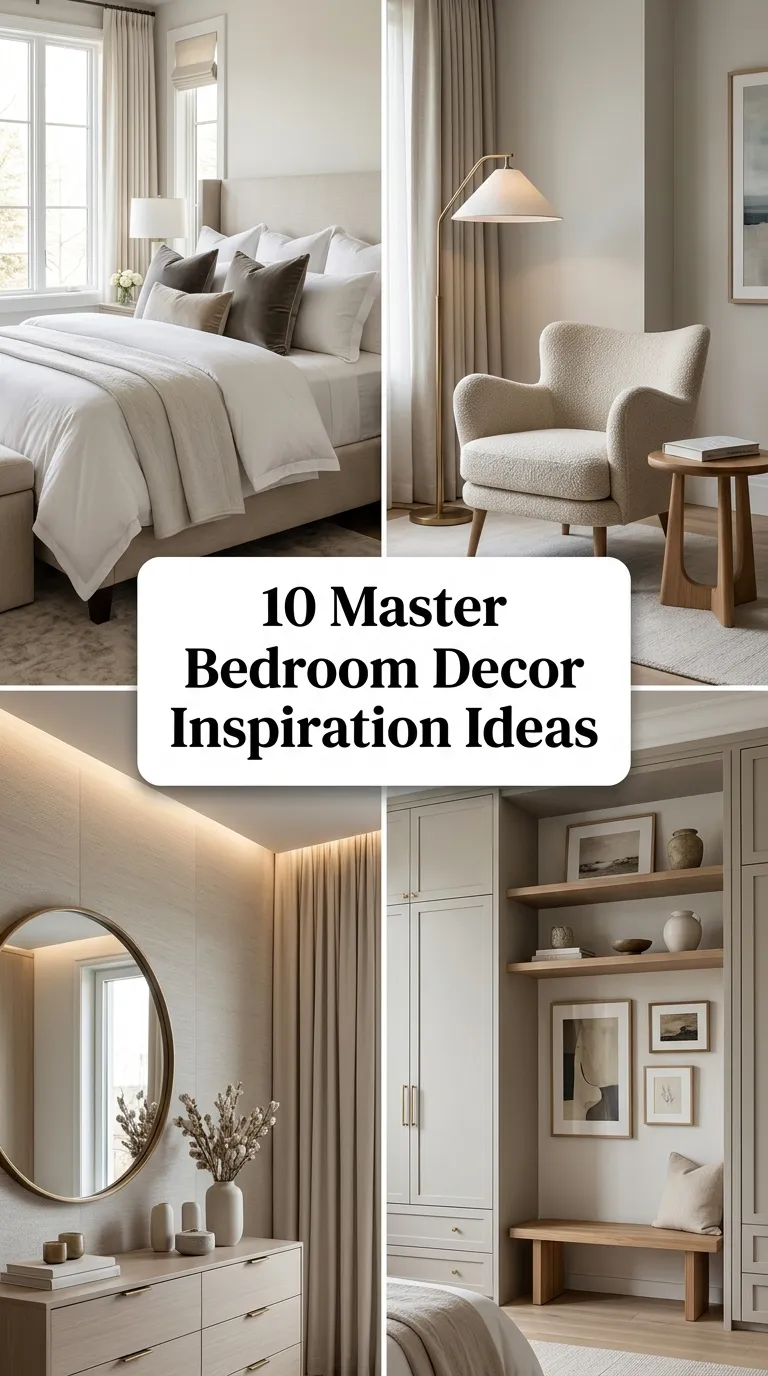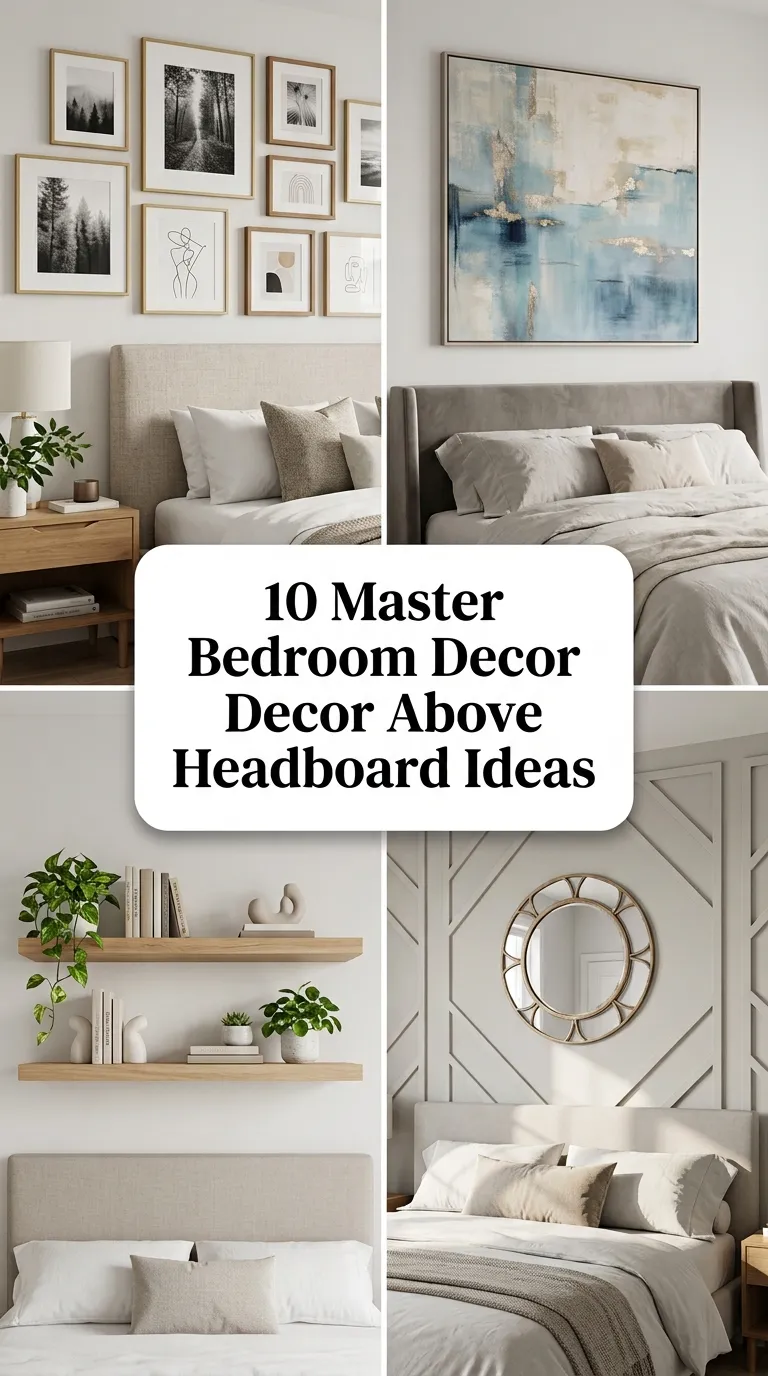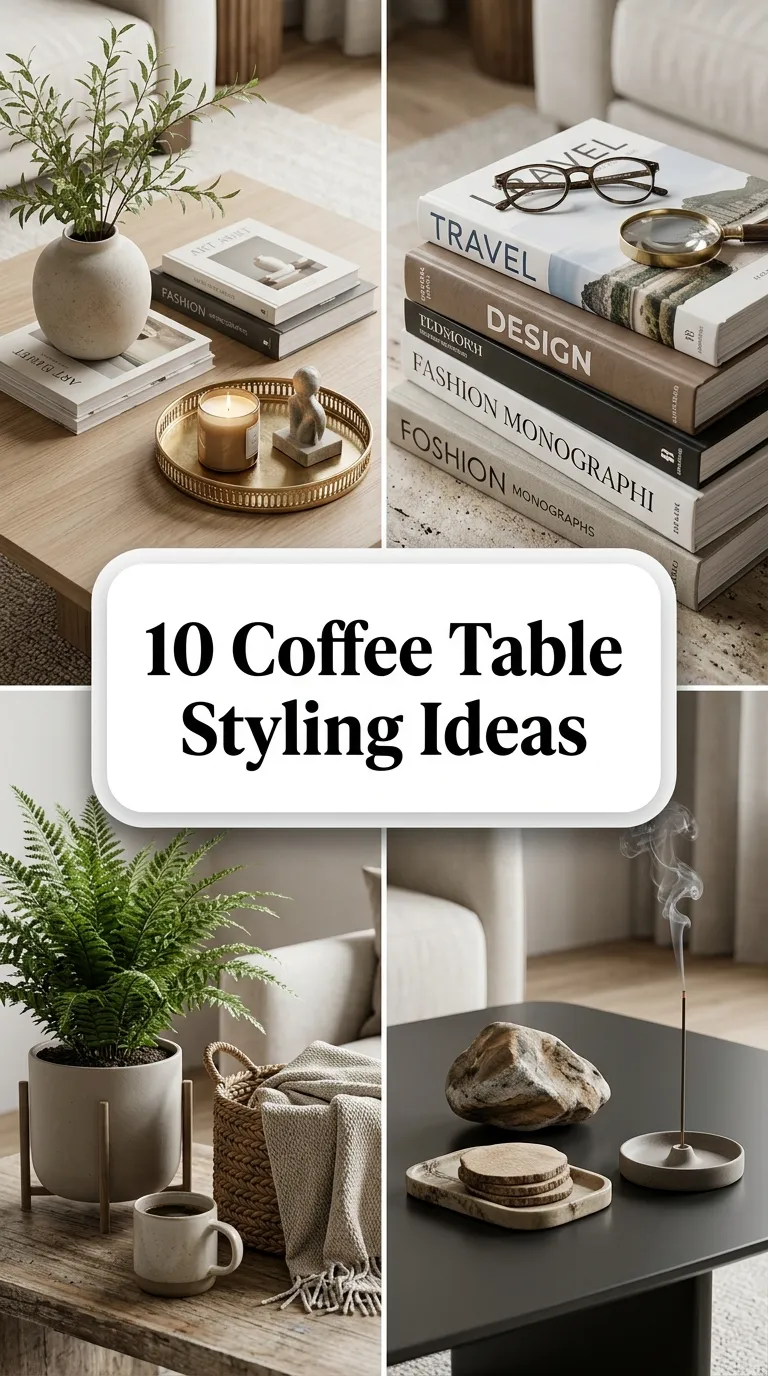
10 Coffee Table Styling Ideas

10 Coffee Table Styling Ideas
Introduction
Styling a coffee table transforms a basic living room layout into a balanced, functional centerpiece. The coffee table functions as the visual anchor of any seating arrangement, making its surface decor critical for overall interior harmony. This comprehensive guide outlines ten distinct methods to arrange decorative items, manage surface proportions, and maintain practical utility. Readers will learn the core rules of composition, height variation, material selection, and symmetry management to enhance their living spaces. Mastering these principles prevents common visual clutter while establishing an organized, elevated atmosphere. Whether designing a compact apartment living area or an expansive formal family room, thoughtful arrangement provides an immediate aesthetic upgrade. Using intentional placement, everyday objects become structural design elements that reflect personal taste, maintain daily practicality, and streamline overall room organization without unnecessary expense or complex renovations.
Why This Idea Is Trending or Useful
Coffee table styling has become a cornerstone of modern interior inspiration because it delivers high visual impact with minimal effort and cost. Homeowners increasingly seek adaptable decorating concepts that allow quick seasonal transitions without requiring full room makeovers. A thoughtfully arranged table surface balances everyday functionality with decorative appeal, making modern homes feel structured yet comfortable. For beginners, tabletop styling serves as an accessible entry point into interior design principles like scale, proportion, contrast, and color balance. It accommodates various interior styles, from warm organic minimalism to eclectic vintage arrangements, making it adaptable to any existing furniture. Because the process relies on curating everyday accessories like hardbound books, small vessels, ceramic bowls, and botanicals, anyone can achieve a polished aesthetic on a reasonable budget while keeping frequently used items easily accessible and organized.
Materials and Preparation
Achieving a cohesive tabletop arrangement requires careful preparation and the right selection of structural decorative elements before arranging items. Gather a versatile tray to ground smaller items, hardbound art or architecture books for flat foundations, textured ceramic vessels for vertical height, and low accent bowls for small utility storage. Basic tools include measuring tape to verify surface clearance, microfiber cloths for surface cleaning, and felt pads under heavy objects to prevent scratches. Begin by clearing the entire table and assessing its overall shape, base material, and surrounding furniture heights. Establish a clear sightline plan so that taller decorative components will not block television screens or seated conversation across the room. Group materials by color palette, surface texture, and silhouette to ensure complementary contrast before placing individual pieces into your designated layout sections.
Main Ideas Section
Idea 1: The Rule of Thirds Tray Layout
How to Create
Divide the table surface into three distinct sections and place an oversized rectangular tray across one side to establish structure. Place a stack of two large hardcover books inside the tray, topping them with a small brass or wood knot sculpture. Position a ceramic vessel holding fresh greenery directly next to the books within the tray boundaries. Use the remaining open tabletop space to position a low, wide stoneware bowl filled with textured stone spheres or left empty for daily practical items. This three-part compositional strategy prevents random clutter by consolidating smaller accessories into a unified container while preserving clear surface area for daily beverages and electronics. Keep the tallest botanicals under fourteen inches so sightlines across the room remain open. Ensure the wood, brass, and ceramic finishes contrast cleanly against the primary table finish.

Idea 2: Organic Minimalist Stack System
Setup Method
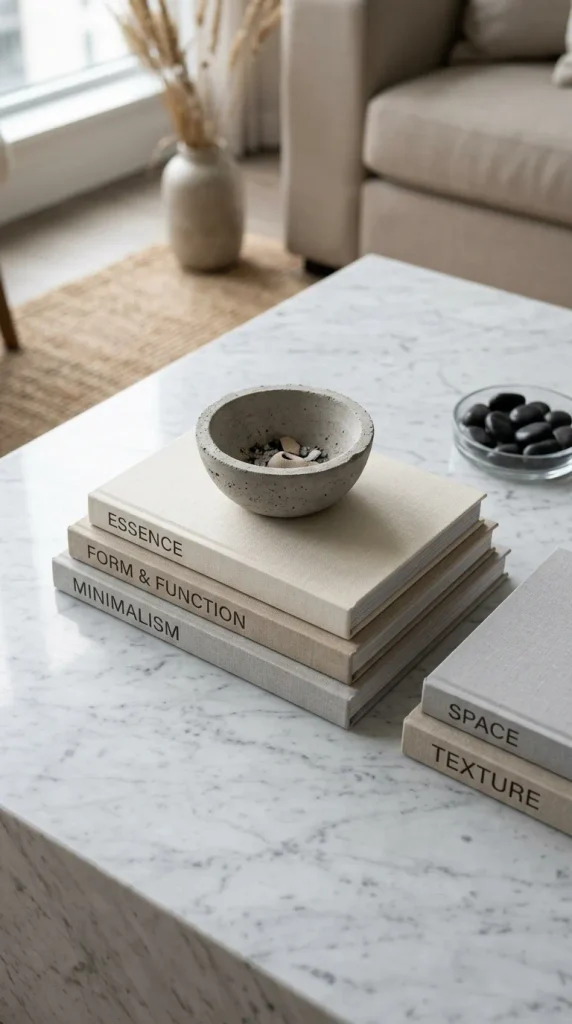
Select two stacks of hardbound design books in neutral canvas or linen finishes to establish a grounded, linear foundation on the table. Place the larger book stack in the center and the smaller stack angled slightly toward the outer edge. Set a single rough-cast concrete or porous travertine bowl on top of the primary book stack to provide raw textural weight. In the opposite open corner, position a wide, shallow glass dish holding smooth river stones to create an asymmetrical balance against the heavy stone textures. Keep sixty percent of the tabletop bare to emphasize clean negative space and highlight the natural wood or stone grain of the furniture itself. Avoid glossy finishes and stick entirely to matte, unglazed ceramic, raw linen, and stone textures to maintain a serene, cohesive modern atmosphere that looks balanced from every seating angle.
Idea 3: Tiered Glass Vessel Trio
Step-by-Step Guide
Group three distinct clear or amber glass cylinders together just off-center to create an anchor point with varying elevations. Ensure the tallest glass vessel reaches ten to twelve inches, the middle vessel sits around seven inches, and the smallest cylinder remains under four inches. Fill the tallest cylinder with dried botanical stems like eucalyptus or preserved branches, leave the middle cylinder empty to catch natural light, and place a pillar candle in the lowest vessel. Position a small, flat marble coaster set beside the glass cluster to balance the visual weight on the opposite side of the table. This layered arrangement allows light to pass directly through the glass, maintaining an open feel in smaller living rooms while providing vertical interest, crisp structural contrast, and subtle ambient warmth during evening hours.

Idea 4: The Geometric Grid Layout
Execution Process
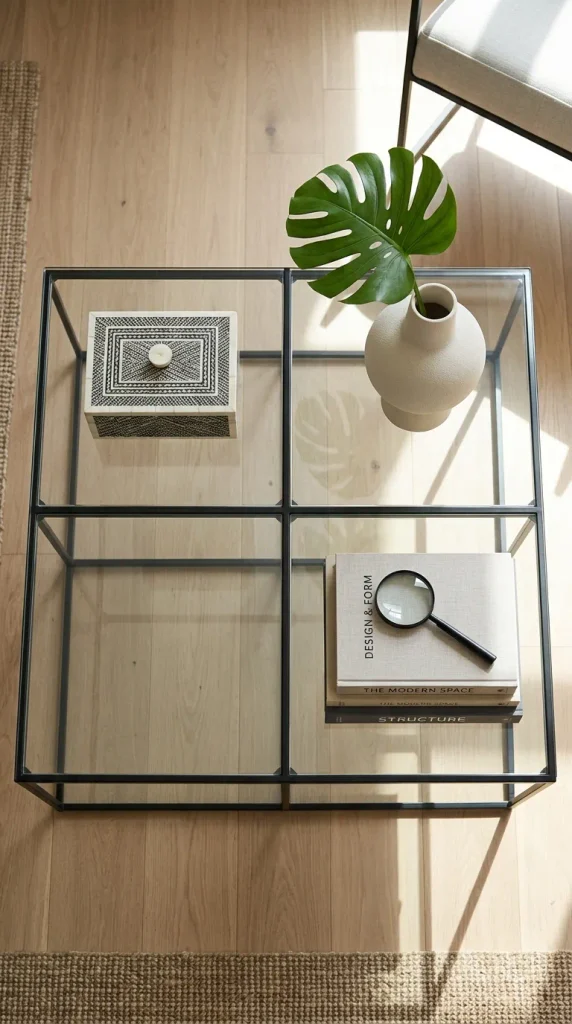
Visualize a four-quadrant grid across a square or round coffee table to create a balanced, contemporary presentation. In the upper-left quadrant, place a structured square storage box with a textured bone-inlay or ribbed wooden lid. In the lower-right quadrant, set two matching hardbound books topped with a minimal metal magnifying glass or geometric paperweight. Place a single architectural ceramic vase containing structured monstera leaves in the upper-right quadrant, and leave the lower-left quadrant completely empty for coasters and daily use. This diagonal counterbalance produces clean symmetry and keeps the arrangement visually engaging from all four sides of the room. Maintaining strict quadrant boundaries prevents items from drifting into messy clusters, ensuring each design element holds a defined footprint that feels intentional, orderly, and architectural.
Idea 5: Sculptural Bowl and Branch Pairing
How to Make
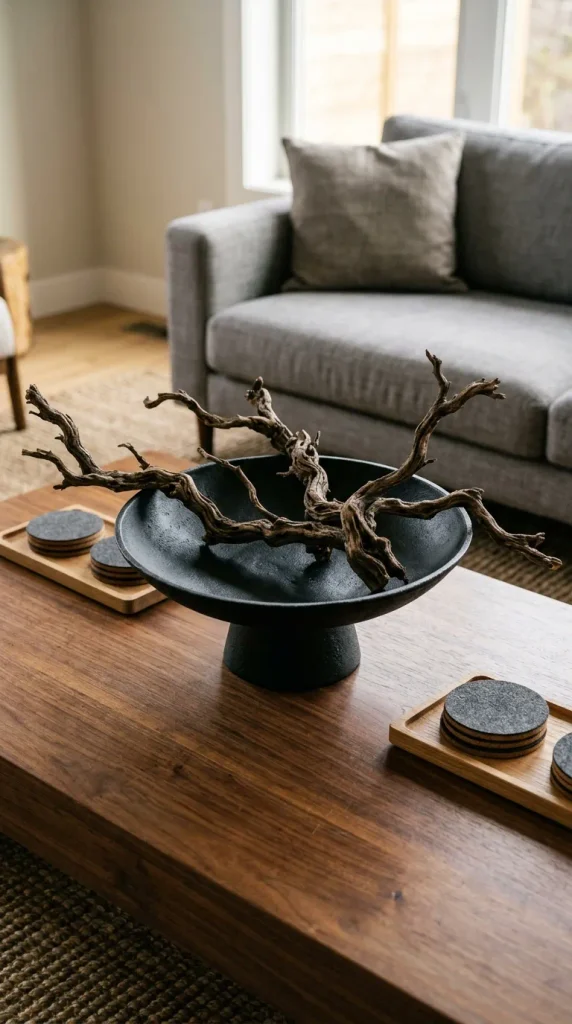
Position an extra-large, shallow pedestal bowl made of black cast iron or dark terracotta in the direct center of the table. Arrange three dried branch cuttings inside the bowl, allowing them to fan outward horizontally rather than standing upright, creating dramatic architectural silhouette lines. Place two low, flat wooden trays containing matching drink coasters on either side of the central pedestal bowl to anchor the overall composition along the table’s length. This layout emphasizes bold silhouettes and horizontal movement, making it particularly effective for long rectangular coffee tables in modern interiors. By concentrating decorative volume inside a single substantial focal bowl, the tabletop remains clean, easy to dust, and completely free from chaotic visual clutter while offering an artistic, museum-inspired look that instantly elevates the living space.
Idea 6: Two-Tone Symmetrical Alignment
Step-by-Step Guide
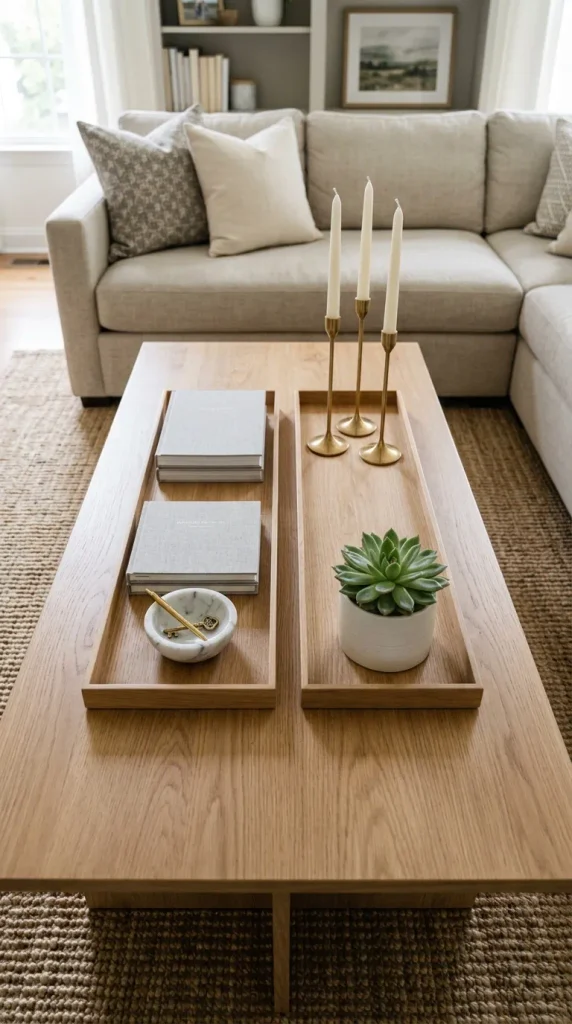
Create formal visual balance by establishing two parallel decorative arrangements along the central axis of a rectangular table. Place two identical low wooden trays side by side, leaving an equal border of empty tabletop space around all outer edges. In the left tray, stack two neutral-toned art journals topped with a smooth horn or marble dish for remote control storage. In the right tray, arrange a small potted succulent in a matte white cylinder alongside a trio of unscented taper candles in low brass holders. Ensure the total height of both tray arrangements matches within two inches to preserve formal equilibrium. This structured layout works exceptionally well in transitional and traditional living rooms, producing a tailored, organized aesthetic that keeps essential accessories neatly contained without overwhelming the room.
Idea 7: Sculptural Mixed-Material Cluster
Setup Method
Combine four distinct natural materials—wood, brushed metal, ceramic, and matte glass—into a compact, unified cluster placed slightly off-center. Anchor the arrangement with a low solid wood block riser, placing a small textured terracotta urn filled with dry wheatgrass directly on top. Beside the wooden riser, place a small polished nickel catchall bowl and a ribbed matte glass votive holder directly on the table surface. Leave the remaining three-quarters of the tabletop completely empty to create dynamic negative space and emphasize the curated cluster. The deliberate contrast between smooth metal, rough clay, warm timber, and translucent glass creates tactile richness without requiring excess items. Keep the overall cluster footprint contained within a fourteen-inch circle to preserve plenty of open surface area for everyday relaxation.

Idea 8: The Linear Modern Book Run
Execution Process
Arrange three sets of hardbound volumes in a continuous, spaced line running parallel to the longest edge of the coffee table. Align all book spines in the same direction toward the primary sofa view, ensuring the book covers feature cohesive neutral, charcoal, or earth-toned colors. Top the first book stack with a minimal black iron taper holder, the center stack with a flat alabaster disc, and the third stack with a tiny potted fern in a low concrete vessel. This horizontal orientation emphasizes the length of the furniture piece and provides a structured foundation that anchors expansive living room settings. The flat profile maintains open sightlines across the room while providing dedicated platforms for small sculptural objects, yielding an organized, editorial look that is simple to refresh.

Idea 9: Pedestal and Floating Vessel Display
How to Make
Place a round marble riser or footed wooden pedestal plate in the center of the table to elevate key decorative items above the table surface. Set a tall, narrow ceramic jug containing fresh olive branches on the pedestal, paired with a small round brass container for storing matches or small items. Directly beside the pedestal on the base table surface, lay two wide art books flat, topped with a smooth river stone or cast-bronze object. Elevating half of the decorative items on a pedestal creates dynamic vertical layers and shadow lines that make the tabletop feel three-dimensional. This method is ideal for dark wood or glass tables, as the varied levels allow light to circulate underneath the raised platform, adding depth and architectural refinement to the entire seating area.

Idea 10: The Coastal Organic Arrangement
How to Create
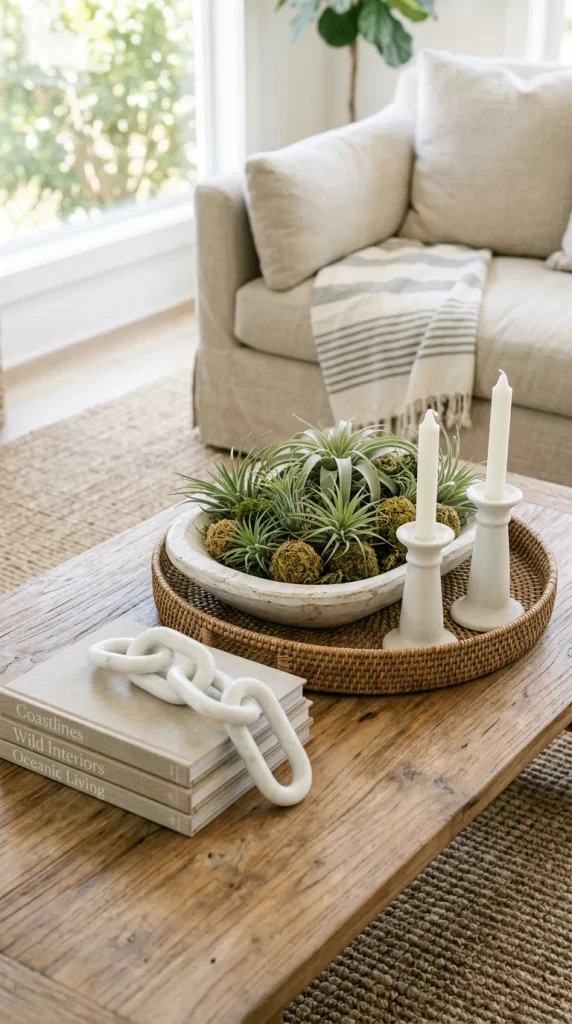
Anchor the center of the table with a woven rattan or seagrass shallow tray to introduce warm woven texture into the space. Inside the woven tray, place a wide bleached wood dough bowl filled with air plants or dried moss spheres to create an organic focal point. Next to the bowl within the tray, position a pair of white ceramic pillar holders supporting ivory candles of slightly different heights. On the table surface outside the tray, place a single stack of linen-bound travel photography books with a polished white marble chain link draped over the top. This layered mix of woven fibers, raw wood, natural greenery, and smooth stone produces a relaxed, airy atmosphere that feels grounded, fresh, and effortlessly put together in bright, light-filled rooms.
Common Beginner Mistakes and How to Avoid Them
The most frequent error in coffee table styling is overcrowding the surface with too many small, unrelated decorative trinkets. When every inch of space is occupied, the table looks cluttered, functional space is lost, and dusting becomes frustrating. Maintain at least forty percent open surface area to preserve negative space and keep the layout functional. Another common mistake is ignoring vertical scale by selecting oversized floral arrangements that block sightlines between seated guests. Keep all decorative elements below eye level when seated, typically under fourteen inches total height. Additionally, avoid placing flat decor items directly onto the table without visual anchors; unanchored items quickly drift across the surface. Use structured trays, shallow bowls, or book stacks to define boundaries and keep distinct accessories grouped into unified, deliberate arrangements.
Practical Tips for Better Results
To achieve professional-quality results, always balance the textures and materials used across the coffee table surface. If your table is constructed from polished marble or glass, introduce warm, tactile elements like rough pottery, matte ceramics, raw timber, and woven trays to soften reflections. For dark or rustic wooden tables, incorporate smooth marble dishes, polished brass accents, and crisp white books to create bright visual contrast. Always view your styling arrangement from all seated and standing angles in the room, not just from the main sofa, to ensure balanced proportions from every perspective. Use the rule of odd numbers when grouping standalone items, as arrangements of three or five pieces appear more dynamic and balanced than even pairings. Rotate botanicals and small accessories seasonally to keep the room feeling fresh without altering your foundational decor.
Styling, Presentation, or Organization Ideas
Effective coffee table presentation balances decorative aesthetics with daily household organization. Incorporate functional storage pieces that double as decorative objects, such as lidded boxes crafted from marble, carved wood, or bone inlay. These containers conceal television remotes, charging cables, extra coasters, and small accessories, keeping the main surface clean and orderly. Use flat, stackable coasters made of slate or travertine that align with the overall color scheme rather than storing them in bulky holders. When positioning art books, choose subjects that reflect genuine household interests, such as architecture, photography, or travel, which serve as natural conversation starters. Keep high-use daily essentials consolidated inside a single dedicated decorative tray so the entire group can be lifted and moved in one smooth motion whenever you need full table access for games, dining, or projects.
Budget or Time Planning
Creating an elevated coffee table display does not require large financial investments or extensive shopping trips. Begin by gathering items you already own from bookshelves, home offices, and storage cabinets, grouping candidates by color, texture, and scale. Thrift stores, estate sales, and secondhand shops are great sources for affordable hardcover art books, vintage brass trays, ceramic vessels, and stone bowls at a fraction of retail prices. Set a realistic budget of thirty to fifty dollars for key accent pieces if purchasing new items, focusing on timeless neutral shapes rather than short-lived design trends. Executing any of the ten featured layouts takes roughly fifteen to twenty minutes once materials are gathered. Spend the first five minutes wiping the table surface, ten minutes arranging and adjusting proportions, and the final few minutes reviewing sightlines and clearing unnecessary items.
Creative Expansion and Advanced Inspiration
Once you master foundational arrangements, expand your styling by experimenting with dynamic multi-table configurations and seasonal transitions. If you have nested or dual coffee tables, treat the surfaces as an interconnected bi-level canvas, using the lower tier for flat storage books and the upper tier for vertical ceramics and greenery. Introduce subtle seasonal changes through natural elements, such as swapping fresh summer eucalyptus for sculptural bare branches in autumn, or replacing pale marble accents with warmer timber vessels during winter. For larger living spaces, explore asymmetric balancing by placing a bold, heavy focal piece on one end while balancing the opposite side with negative space and a single delicate accent. Layering textures, refining spatial awareness, and experimenting with architectural silhouettes turns your coffee table into an adaptable design centerpiece that evolves alongside your home.